Injection Needle Assembly Machine
Glue goes onto the needle hub, cures under UV light, then the needle is checked.
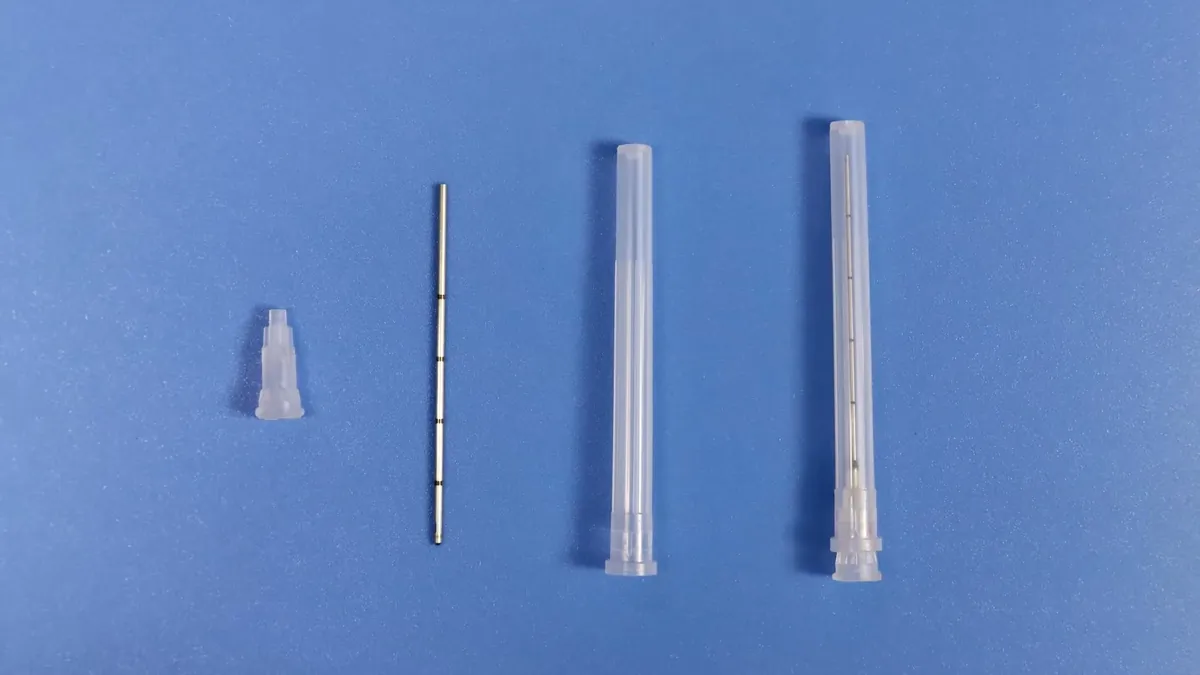
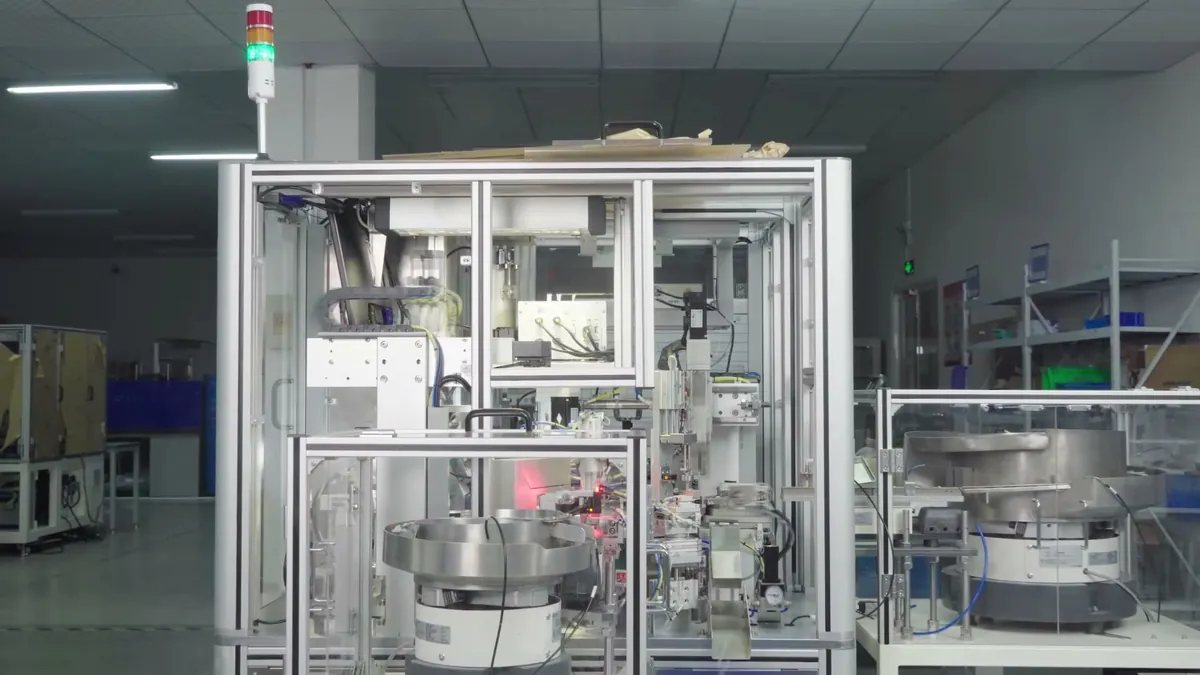
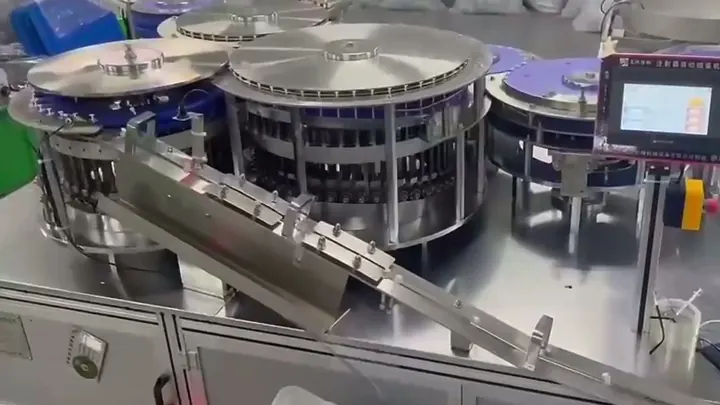
This machine assembles injection needles from three parts: the plastic hub, the steel cannula and the protective cap.
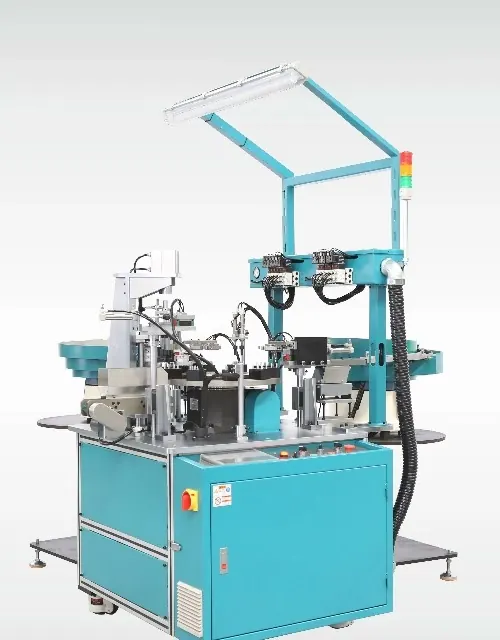
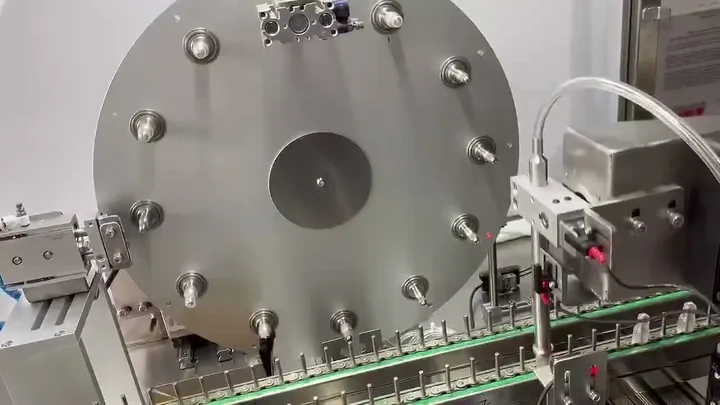
The parts move from station to station on a rotary table: glue is dispensed where the cannula meets the hub and cured under UV light, then each finished needle is checked in a fixture. A typical machine runs about 900–1,000 needles per hour.
Send drawings or photos of your needle parts, and we'll tell you whether they fit, and how fast.
Key Points
- Three parts: hub, steel cannula and protective cap
- Glue dispensing and UV curing on a rotary table
- About 900–1,000 needles per hour (typical)
- Parts fed by vibratory bowls
- Exact quote within 24–48 hours once we have your part details
- Warranty: 2 years on mechanical parts, 1 year on electrical parts, for faults not caused by misuse
Typical specifications
| Item | Value |
|---|---|
| Output | About 900–1,000 pcs/hour (typical) |
| Parts | Three: hub, steel cannula, protective cap |
| Joining | Glue dispensing, UV curing |
| Layout | Rotary table, vibratory bowl feeding |
| Warranty | 2 years on mechanical parts, 1 year on electrical parts (faults not caused by misuse) |
Typical figures. Every machine is set up for your own needle parts.
Suitable Parts
Injection needles: plastic hub, steel cannula and protective cap.
Frequently Asked Questions
How it works: How a Rotary Assembly Machine Works, Step by Step
How it is assembled: How Syringes and Needles Are Assembled by Machine
Request a Quote for This Machine
Send us your part drawing or photos. We check which machine can assemble it, then send you a quote.