How a Vision Inspection Machine Checks Caps and Parts
How a camera inspection machine checks caps, closures and small parts on a production line: how the parts are fed, imaged, judged and taken out, with the real machines we supply.
What is a vision inspection machine? A vision inspection machine, also called a visual inspection machine or camera inspection system, checks each part with a camera as the parts pass through it one after another, and shows the result on a screen. The machines differ mainly in how the parts are fed to the camera; what the camera checks is set up around your own part.
Key takeaways
- A camera check has four steps: parts are fed to the camera, each part is imaged, a screen shows the result, and the checked parts leave the machine.
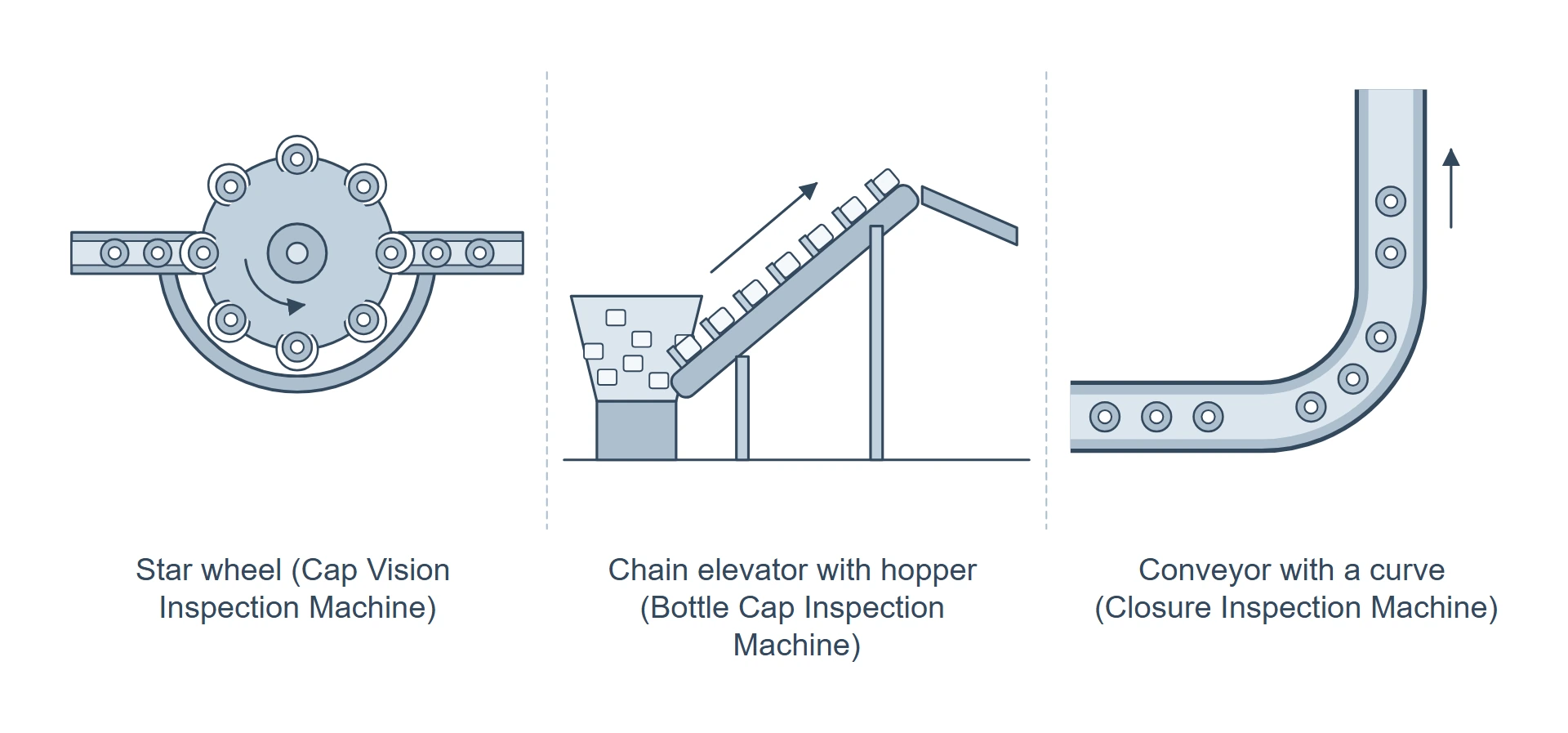
- What changes from machine to machine is the feed: a star wheel, a chain elevator with a hopper, or a conveyor with a curve, and all three list 200–250 pieces per minute (typical).
- The screen can show more than a bare result: on our electrode machine it shows the image of each piece with its measured values.
- Inspection can sit inside an assembly line, as on our wine and liquor cap line, which checks every cap at about 5,000 caps per hour (typical).
- You define the checks: each part is inspected against the points you give us, so we ask for photos of the part, the list of checks and your target output.
A cap-type inspection machine. What you will see: parts riding a black star wheel through the vision station, then a full view of the inspection cabinet.
The four steps of a camera check
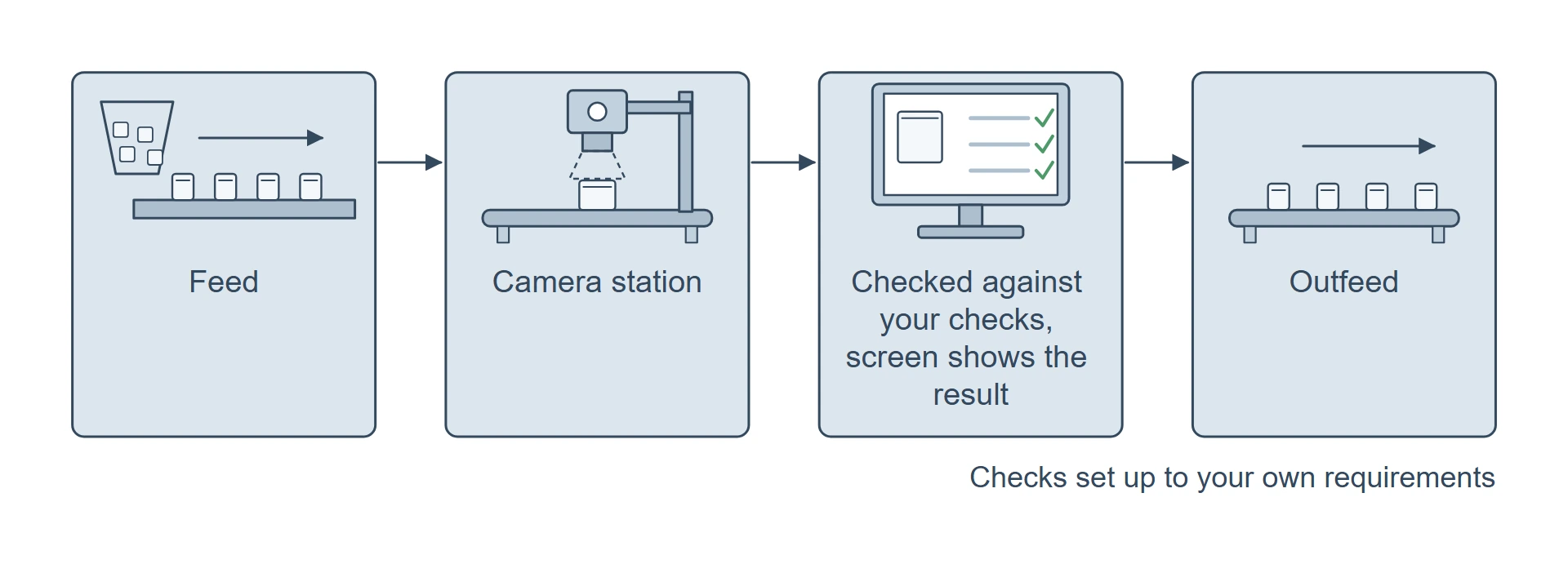
1. Feed. The machine brings the parts to the camera one after another or in rows. The next section shows the three ways we feed caps and round parts. On the electrode machine, a vibratory bowl feeds the pieces to the camera stations.
2. Image. A camera looks at each part inside the cabinet. The closure inspection machine has cameras that check the parts in the cabinet, the electrode machine has two camera stations that check every piece, and the valve body line has a CCD camera with a ring light above the belt.
3. Result. Each part is checked against the checks you set, and the screen shows the result. On the battery electrode machine the screen lists the dot count in each area and the distance between the two circles next to the image of the piece, with the result. The bottle cap machine carries two screens on the inspection cabinet, and the cap vision machine has its own screen and push buttons.
4. Outfeed. The checked parts leave the machine on a belt or conveyor. On the bottle cap machine a belt takes the checked caps out; on the valve body line the parts queue at the end of the belt; on our wine cap line the finished caps leave on a conveyor.
Three ways to feed parts to the camera
A star wheel, a chain elevator or a conveyor with a curve: the feed is what changes from machine to machine.
| Machine | How parts reach the camera | Typical output | Page |
|---|---|---|---|
| Cap Vision Inspection Machine | A black star wheel carries each part through the vision station inside a guarded cabinet, which has its own screen and push buttons | 200–250 pieces per minute | Cap Vision Inspection Machine |
| Bottle Cap Inspection Machine | A chain elevator lifts the caps from a hopper into the inspection cabinet, which carries two screens; a belt takes the checked caps out | 200–250 pieces per minute | Bottle Cap Inspection Machine |
| Closure Inspection Machine | Round parts, such as closures, caps and cups, travel in rows along a conveyor, around a curve and into the inspection cabinet | 200–250 pieces per minute | Closure Inspection Machine |
Beyond caps
The same four steps check other small parts, and the camera station is configured for each. Our battery electrode inspection machine checks aluminium electrode pieces one at a time, with a vibratory bowl feeding two camera stations, a belt transfer and a cabinet of 1200 × 550 × 1850 mm, at 200–250 pieces per minute (standard model). Our automotive valve body line checks valve bodies with a CCD camera as they ride a conveyor belt under a ring light: 8–15 pieces per minute and 1300 × 800 × 1600 mm on the standard model, ready for 14 valve body shapes. Our car camera inspection line links guarded stations along one flexible conveyor, with robot arms moving the camera modules in and out of each station.
Inspection built into a line
A camera station can sit inside an assembly line, so the check happens as the product is made. On our wine and liquor cap assembly line, cap shells and inner plugs are put together station by station on rotary tables, and a camera station checks each cap, including the QR code printed inside; a typical line runs about 5,000 four-part caps per hour. Our top and bottom capping machine has a vision system that checks the parts, at 6,000–10,000 per hour. Our insulin pen inspection and tray loading line, where cameras and sensors check each pen, has been supplied to Bangladesh. See how insulin pens are assembled and tested.
A bottle cap inspection machine. What you will see: blue caps tipped into the hopper and carried to the vision cabinet, where cameras check each cap with results on two screens.
A closure inspection machine. What you will see: round white parts travelling in rows into the inspection cabinet, around a curved conveyor and under the cameras.
A valve body inspection line. What you will see: valve bodies riding a green belt under a ring-light camera, then queuing at the stop.
A battery electrode inspection machine. What you will see: a vibratory bowl feeding electrode pieces to two camera stations, with the screen showing the image and the result.
A wine cap assembly line. What you will see: gold shells passing the camera, inner plugs going in, and finished red-and-gold caps filing out.
What to send us
Send photos of your part, tell us what each part has to be checked for, and give your target output. With those we tell you whether the machine fits. Get an exact quote within 24–48 hours once we have your part details.