
Lotion Pump Assembly: Stations, Step by Step
How a lotion pump is put together by machine: from the pump core to the dip tube and the final test, with the machines we have supplied for each step.
What is lotion pump assembly? Lotion pump assembly is the process of putting a lotion pump together from its separate parts: the pump housing, spring, piston and piston rod go into the pump body, a gasket and the closure are fitted, the pump head is assembled, and the dip tube is inserted. It can be done by hand, step by step, or by machine on a rotary table or a full line.
Key takeaways
- A lotion pump is assembled in stages: pump core, body and gasket, pump head, dip tube, and testing; you can automate one stage or all of them.
- A rotary turret puts the pump housing, spring, piston and piston rod together into the pump body; a rotary machine we supplied in Pakistan assembles six-part pumps at a rated 5,000 pumps per hour.
- The dip tube is fitted on its own machine; the Pakistan dip tube inserting machine is rated at 1,200 pumps per hour.
- A multi-station assembly and testing machine runs 50–65 pieces per minute, and a fatigue tester presses pump heads down again and again.
- Every machine is set up for your own pump parts, so the speed depends on your pump.
A rotary lotion pump assembly machine. What you will see: an inclined elevator lifting clear pump parts into a large vibratory bowl, the parts leaving on toothed tracks past a row of sensors, and the pumps coming together station by station on the rotary table.
The parts of a lotion pump
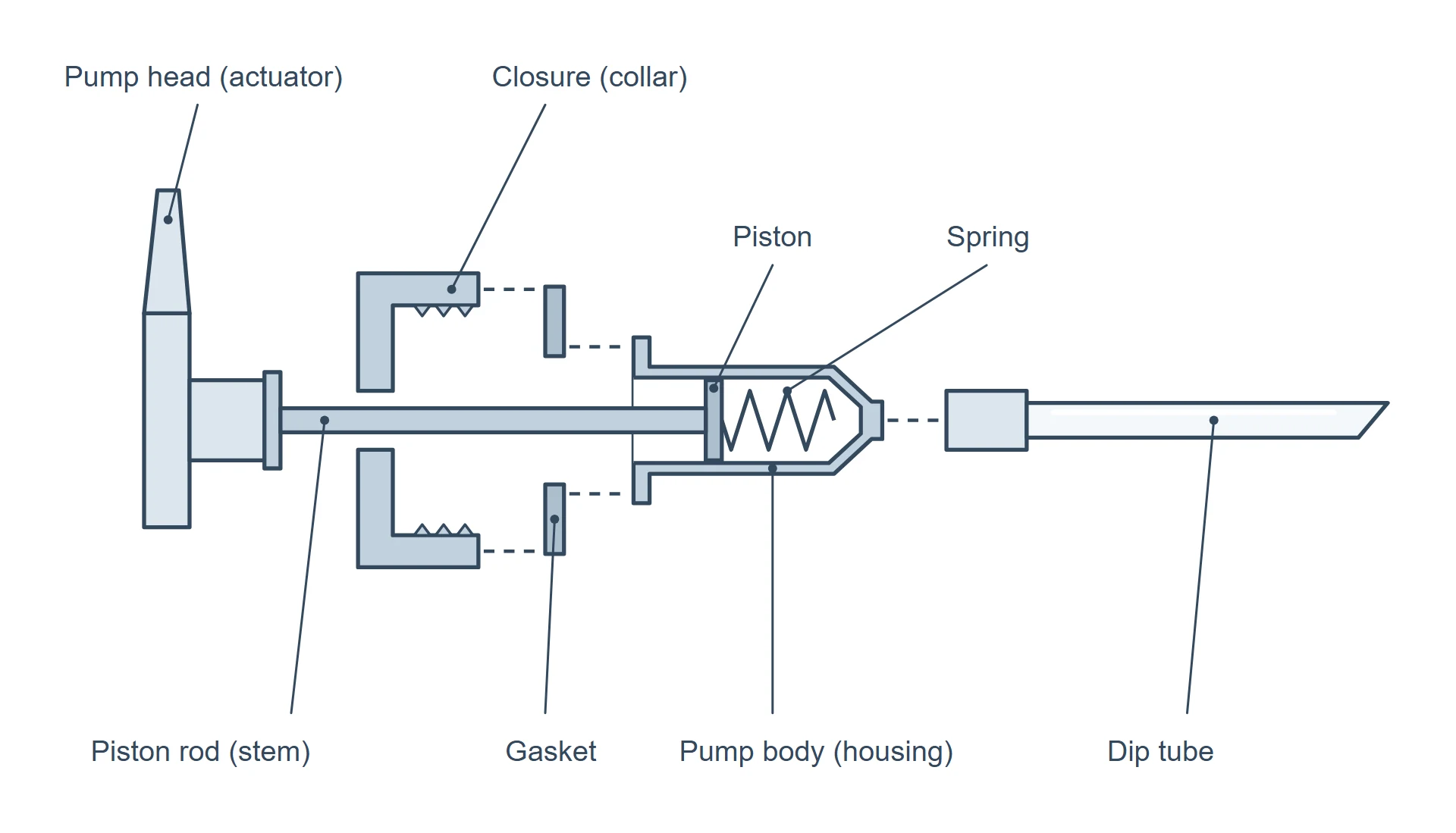
A lotion pump is made of a pump body that holds the pump housing, spring, piston and piston rod; a gasket and a closure that fit the pump body; the pump head you press; and the dip tube that reaches down into the bottle. The pump we supplied a machine for in Pakistan has six parts; the pump core in our UAE case is three small white parts.
The five stages of lotion pump assembly
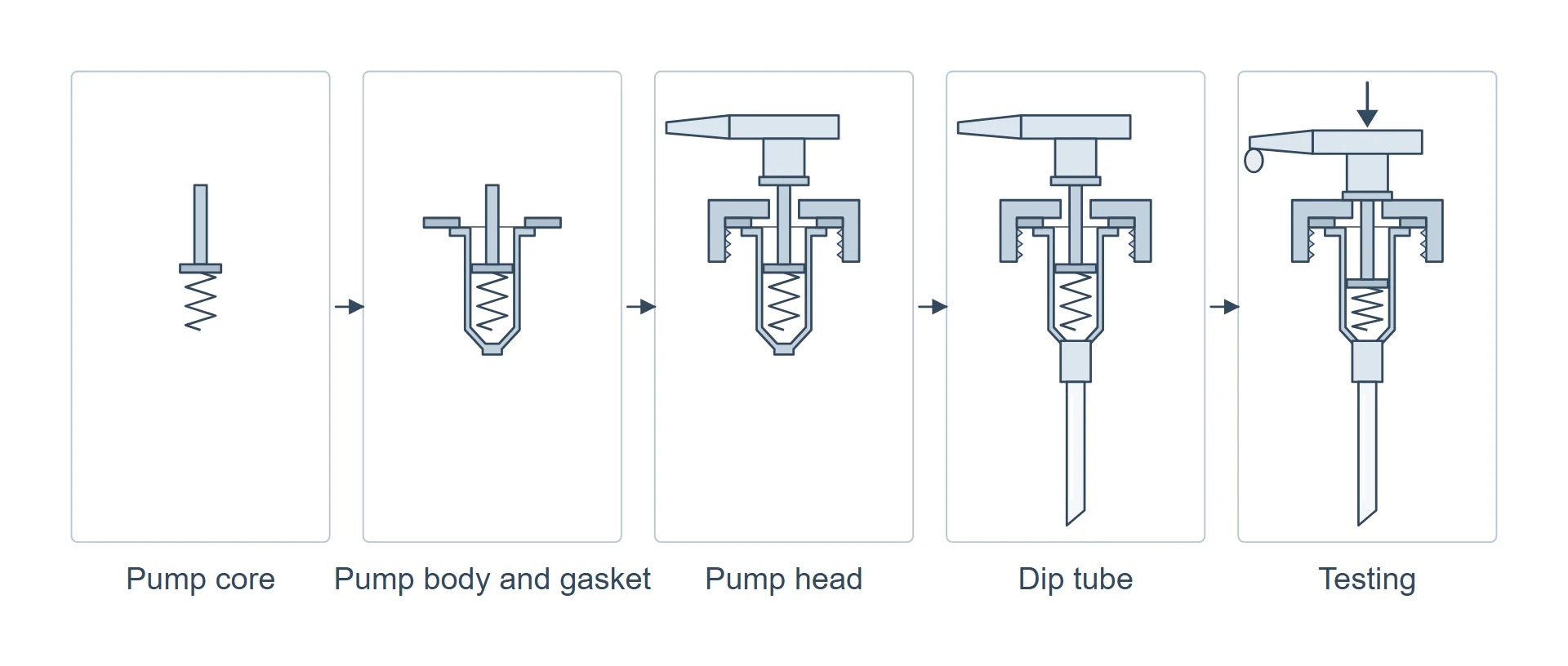
1. Pump core. A rotary turret puts the housing, spring, piston and piston rod together into the pump body. A vibratory bowl feeds the white parts along a track to the table, where each core stands upright in its own fixture and twin pneumatic grippers set each piece in place as the table indexes. A pump core machine we supplied in the UAE is rated at 5,000 finished pump cores per hour.
2. Pump body and gasket. The machine fits the gasket onto the pump body and can fit the closure on the same machine. Vibratory bowls feed pump bodies and white gaskets to a rotary turret, so neither goes on by hand. This machine is rated at 100 pieces per minute.
3. Pump head. The lotion pump head assembly machine AM-TY-03 assembles the pump head from its separate parts. Pressing heads work over a large rotary table carrying white pump heads between stations. Typical output is 40–60 pieces per minute. (The six-part whole-pump rotary machine we supplied in Pakistan is a different machine, rated at 5,000 pumps per hour.)
4. Dip tube. A separate machine fits the dip tube into each pump. An inclined elevator tips the pump heads into a vibratory bowl, which lines them up and sends them down a track onto a long inserting table, where each pump gets its tube. The Pakistan machine is rated at 1,200 finished pumps per hour.
5. Testing. A fatigue tester presses pump heads down again and again, and a multi-station machine assembles and tests on one machine. The tester checks that pump heads keep working after many presses. The multi-station lotion pump assembly and testing machine runs 50–65 pieces per minute, and finished parts leave through two outlet chutes. This is the usual order on the machines we have supplied; a different pump design can change it.
Which machine for which job
| You need | Machine | Output |
|---|---|---|
| The whole pump on one machine | Rotary lotion pump assembly machine | 40–60 per minute (model quoted); the six-part Pakistan machine is a separate case, rated at 5,000 per hour |
| The whole pump on a full line | Lotion pump assembly line, pumps move around a closed loop through the assembly stations | 50–65 per minute, set by the final assembly and testing station |
| The pump head | Lotion pump head assembly machine AM-TY-03 | 40–60 per minute (typical) |
| The gasket and closure on the pump body | Pump body and gasket assembly machine | 100 per minute |
| The dip tube | Dip tube inserting machine | 1,200 per hour (rated, Pakistan) |
| Assembly and testing together | Multi-station lotion pump assembly and testing machine | 50–65 per minute |